Recently I was asked a question via email:
"Because Ayurvedic cooking uses almost no use of ghee and vegetable oils? Ghee should not be very fat and therefore not good for health?
Let's see what they say ayurvdica the cookbooks I have at home about the ghee:
"The ghee (ghi) of Ayurvedic cuisine is considered an elixir of life and youth moon. E 'lighter than butter and other fats. Prepared and used properly, it strengthens the organs of digestion and makes food more digestible, thereby giving them a flavor intense without changing its content in vitamins and nutrients. In addition, the ghee is the ideal way to facilitate the absorption by the body of fat-soluble vitamins, minerals and trace elements. "
E. Schrott, ayurveda cooking, Tecniche Nuove, Milano 2000
"For centuries, the ghee was a sign of prosperity in India and the Vedic times who had a large supply of ghee was as if possessed liquid gold. The Vedic literature actually refers to the ghee as "food for thought", a source of protein and energy. In different parts of India are used other oils such as in Bengal mustard oil is used for preserves (pickles) and green leafy vegetables, in Gujarat and Maharashtra is used coconut oil, or sesame seed oil is great variety of dishes. But the ghee is the best choice for those who want to explore the true Vedic tradition.
If you do not have particular problems of diet, cook with a moderate amount of ghee is not more harmful than using other oils, but according to some researchers is better and the taste can not be imitated. Some describe it with a flavor of nuts and sweet ", but for me this is a vague description: c''è something wonderful, almost caramel while stirring a pot of ghee on the fire.
While the butter is an obvious choice to serve at table or for cooking in the oven, you can not use the fire for most of the dishes. This is because it is composed of 80% fat, 18% water and 2% of solid protein and above 120 ° C the solid starts to burn. Ghee becomes the best choice as it lacks the solid part. The French clarified butter is melted unsalted butter and separating the clear yellow fat from the milk protein solids. Ghee is made with a 'further cooking of the melted butter until the proteins have solidified and darkening. All the water has evaporated Golden is the concentrated fat is carefully filtered. Not only the taste is enhanced by this process, but the point of smoke rises up to 190 ° C and at this point any kind of frying or other cooking method can.
[...] Ghee can be prepared in quantity and stored for several months: two months in a cool room, 4 months in the refrigerator and up to six months if frozen. In
gourmet natural food stores or the big cities you can find raw unsalted butter made from unpasteurized cream, this can give a taste of times past. Or you can prepare yourself
butter from which to make ghee.
Yamuna devi, The art of Indian vegetarian cooking , Leopard, London 1995
(my translation)
"Because Ayurvedic cooking uses almost no use of ghee and vegetable oils? Ghee should not be very fat and therefore not good for health?
Let's see what they say ayurvdica the cookbooks I have at home about the ghee:
"The ghee (ghi) of Ayurvedic cuisine is considered an elixir of life and youth moon. E 'lighter than butter and other fats. Prepared and used properly, it strengthens the organs of digestion and makes food more digestible, thereby giving them a flavor intense without changing its content in vitamins and nutrients. In addition, the ghee is the ideal way to facilitate the absorption by the body of fat-soluble vitamins, minerals and trace elements. "
E. Schrott, ayurveda cooking, Tecniche Nuove, Milano 2000
"For centuries, the ghee was a sign of prosperity in India and the Vedic times who had a large supply of ghee was as if possessed liquid gold. The Vedic literature actually refers to the ghee as "food for thought", a source of protein and energy. In different parts of India are used other oils such as in Bengal mustard oil is used for preserves (pickles) and green leafy vegetables, in Gujarat and Maharashtra is used coconut oil, or sesame seed oil is great variety of dishes. But the ghee is the best choice for those who want to explore the true Vedic tradition.
If you do not have particular problems of diet, cook with a moderate amount of ghee is not more harmful than using other oils, but according to some researchers is better and the taste can not be imitated. Some describe it with a flavor of nuts and sweet ", but for me this is a vague description: c''è something wonderful, almost caramel while stirring a pot of ghee on the fire.
While the butter is an obvious choice to serve at table or for cooking in the oven, you can not use the fire for most of the dishes. This is because it is composed of 80% fat, 18% water and 2% of solid protein and above 120 ° C the solid starts to burn. Ghee becomes the best choice as it lacks the solid part. The French clarified butter is melted unsalted butter and separating the clear yellow fat from the milk protein solids. Ghee is made with a 'further cooking of the melted butter until the proteins have solidified and darkening. All the water has evaporated Golden is the concentrated fat is carefully filtered. Not only the taste is enhanced by this process, but the point of smoke rises up to 190 ° C and at this point any kind of frying or other cooking method can.
[...] Ghee can be prepared in quantity and stored for several months: two months in a cool room, 4 months in the refrigerator and up to six months if frozen. In
gourmet natural food stores or the big cities you can find raw unsalted butter made from unpasteurized cream, this can give a taste of times past. Or you can prepare yourself
butter from which to make ghee.
Yamuna devi, The art of Indian vegetarian cooking , Leopard, London 1995
(my translation)

I think the main reason why it is used ghee is precisely the point here is smoking . This indicates the "purity" of the fat used. Ghee is also used in fire ceremonies. My Hindi reader once said that he thought the ghee was invented precisely for this reason. I do not know if you have this how these ceremonies. Sacrificial arena of wood are turned on and then with various mantra is added ghee (which serves as fuel) and are often added (offered) to fire cereals. The problem is that any oil would be used in smoke, while the ghee even if added to the burning wood, makes a fuel but in the absence of (further) smoke. All substances that would make smoking were eliminated in the production of ghee, and these are the same substances that if used long feeding may cause health problems.
If done correctly, ghee can be stored for long periods without deteriorating. What's not to be of little use in a hot country like India. For me the ghee lasts much longer timeframe given by the Yamuna: 6 months without a hard freeze them all if done properly. Then obviously takes more or less depending on how much water we have evaporate and how much fat we have eliminated. Depending on the temperature of the ghee will solidify or become liquid. But I can not tell you how many degrees this happen.
In addition to cooking, ghee is used as an ayurvedic medicine for type gastric problems, digestive and liver. But as a fat used as a treatment of the liver, or to better digest? Yes! I'm not a doctor, so I can not explain why, but I often feel that if you have digestion problems, there is nothing better than a spoonful of ghee at the end of the meal. I've never tried it, but they say works. (Do not try this without consulting a doctor, I highly recommend!). But there is no doubt that everything is cooked with ghee is easier to digest, including fried. Try it fried in ghee or in any oil, even EVO. Ghee has an incomparable taste and an unparalleled lightness. As already said
Yamuna, mustard oil is another commonly used in India. Or as she puts it in Bengal. Normally, the mustard oil is heated to the point where they start smoking. Then you add spices and the rest. This is to remove its characteristic sour taste.
And here we are still the starting point ... if you smoke a fat, does the body good?
Other oils such as almond, olive, coconut, etc ... are mainly used in massage (trouble telling an Indian who eat olive oil! opinion of many is not edible, and then India has prohibitive prices. But here we are contemporary in appearance folk !!!).
The coconut oil I have ever seen used as a mask for hair after washing. You have this beautiful shiny hair of the Indian? Actually come from this oil. For me it has an anti laundering and anti-dehydration. But if you use it in Italy in the same amount used by the Indian you find yourself alone with greasy hair, that's because they use it by the ton (= make a marinade of hair oil, to use a culinary term! J)
There are areas where coconut oil is used safely in the kitchen, Yamuna says Gujarat and Maharastra. I've never been there, but from various recipes I've seen around, I would say South India and the whole of Indonesia-Singapore-Malasya-
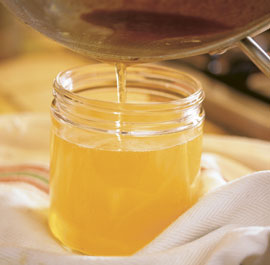
... But in the end how to make ghee? The process is very simple: just be careful and not used to the flame accelerated. Calm and patience for best results.
is the procedure:
Chop 500g of fresh butter (unsalted) and rinse under water until it appears clear and free of any trace of protein. (I never washed the butter under the water ... maybe ...). Place the butter in a saucepan and melt medium heat. When the surface begins to foam, reduce heat and simmer without the lid, skimming occasionally (again, I do not ever foam) . The noise you hear during boiling indicates that the water has not yet evaporated. Simmer until the butter begins to sizzle, but not just remove it immediately stops the fire to prevent burning. Must assume a golden color and a perfume reminiscent of walnuts, without becoming brown.
If done correctly, ghee can be stored for long periods without deteriorating. What's not to be of little use in a hot country like India. For me the ghee lasts much longer timeframe given by the Yamuna: 6 months without a hard freeze them all if done properly. Then obviously takes more or less depending on how much water we have evaporate and how much fat we have eliminated. Depending on the temperature of the ghee will solidify or become liquid. But I can not tell you how many degrees this happen.
In addition to cooking, ghee is used as an ayurvedic medicine for type gastric problems, digestive and liver. But as a fat used as a treatment of the liver, or to better digest? Yes! I'm not a doctor, so I can not explain why, but I often feel that if you have digestion problems, there is nothing better than a spoonful of ghee at the end of the meal. I've never tried it, but they say works. (Do not try this without consulting a doctor, I highly recommend!). But there is no doubt that everything is cooked with ghee is easier to digest, including fried. Try it fried in ghee or in any oil, even EVO. Ghee has an incomparable taste and an unparalleled lightness. As already said
Yamuna, mustard oil is another commonly used in India. Or as she puts it in Bengal. Normally, the mustard oil is heated to the point where they start smoking. Then you add spices and the rest. This is to remove its characteristic sour taste.
And here we are still the starting point ... if you smoke a fat, does the body good?
Other oils such as almond, olive, coconut, etc ... are mainly used in massage (trouble telling an Indian who eat olive oil! opinion of many is not edible, and then India has prohibitive prices. But here we are contemporary in appearance folk !!!).
The coconut oil I have ever seen used as a mask for hair after washing. You have this beautiful shiny hair of the Indian? Actually come from this oil. For me it has an anti laundering and anti-dehydration. But if you use it in Italy in the same amount used by the Indian you find yourself alone with greasy hair, that's because they use it by the ton (= make a marinade of hair oil, to use a culinary term! J)
There are areas where coconut oil is used safely in the kitchen, Yamuna says Gujarat and Maharastra. I've never been there, but from various recipes I've seen around, I would say South India and the whole of Indonesia-Singapore-Malasya-
... But in the end how to make ghee? The process is very simple: just be careful and not used to the flame accelerated. Calm and patience for best results.
is the procedure:
Chop 500g of fresh butter (unsalted) and rinse under water until it appears clear and free of any trace of protein. (I never washed the butter under the water ... maybe ...). Place the butter in a saucepan and melt medium heat. When the surface begins to foam, reduce heat and simmer without the lid, skimming occasionally (again, I do not ever foam) . The noise you hear during boiling indicates that the water has not yet evaporated. Simmer until the butter begins to sizzle, but not just remove it immediately stops the fire to prevent burning. Must assume a golden color and a perfume reminiscent of walnuts, without becoming brown.
At this point I filter in a strainer lined with cotton, so that the fat and charred remains separate.
The cooking time for 500g of butter varies depending on the intensity of the flame 30 to 60 minutes to two kg may be needed more than 2 hours.
E. Schrott, ayurveda cooking, Tecniche Nuove, Milano 2000
E. Schrott, ayurveda cooking, Tecniche Nuove, Milano 2000


0 comments:
Post a Comment